
























Published 25 February 2020
Last Updated 02 July 2026
Most of us sort our recycling without really knowing what we're sorting. A milk bottle goes in the recycling bin. A yoghurt pot goes in and too. But these are actually completely different plastics with completely different ways of recycling.
The Numbering System: Where It Comes From
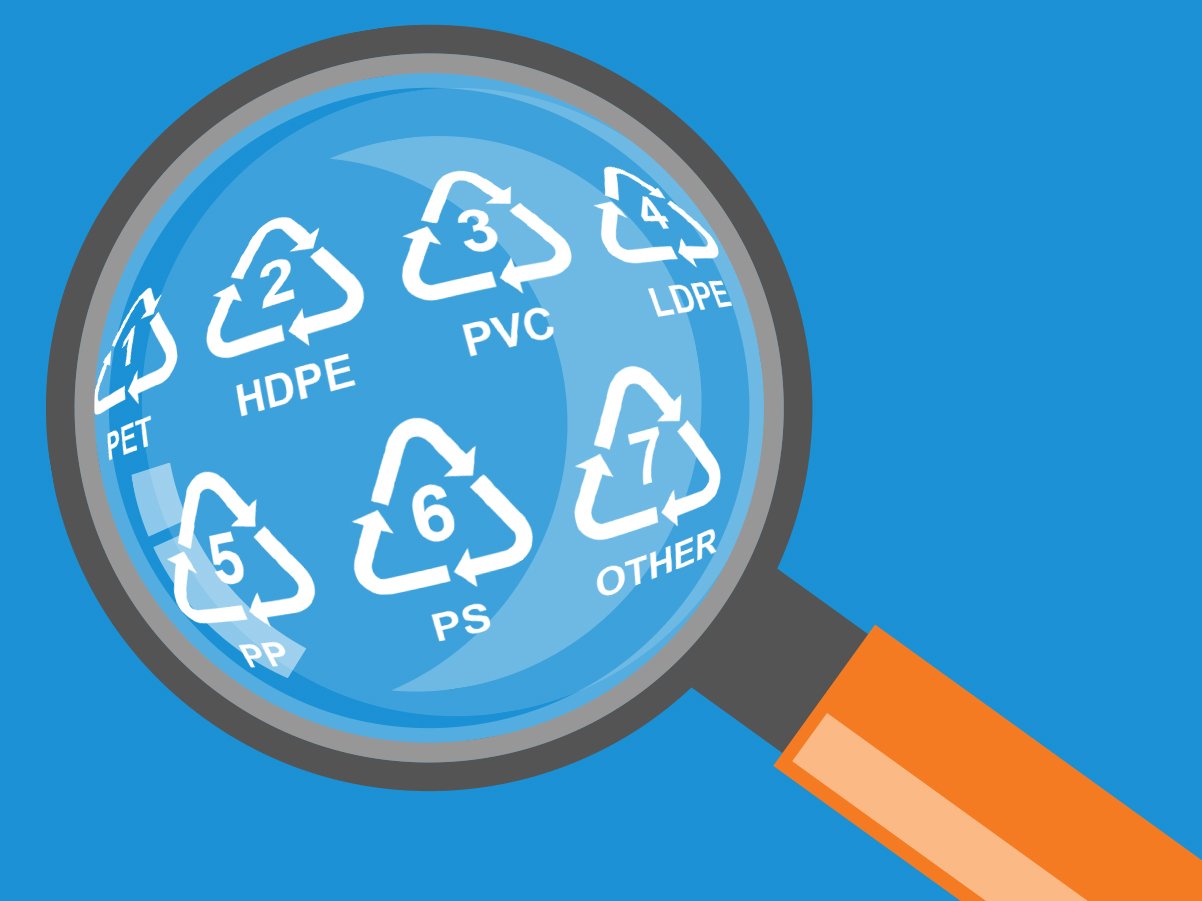
| Plastic | Code | Typical Uses | Kerbside Recyclability |
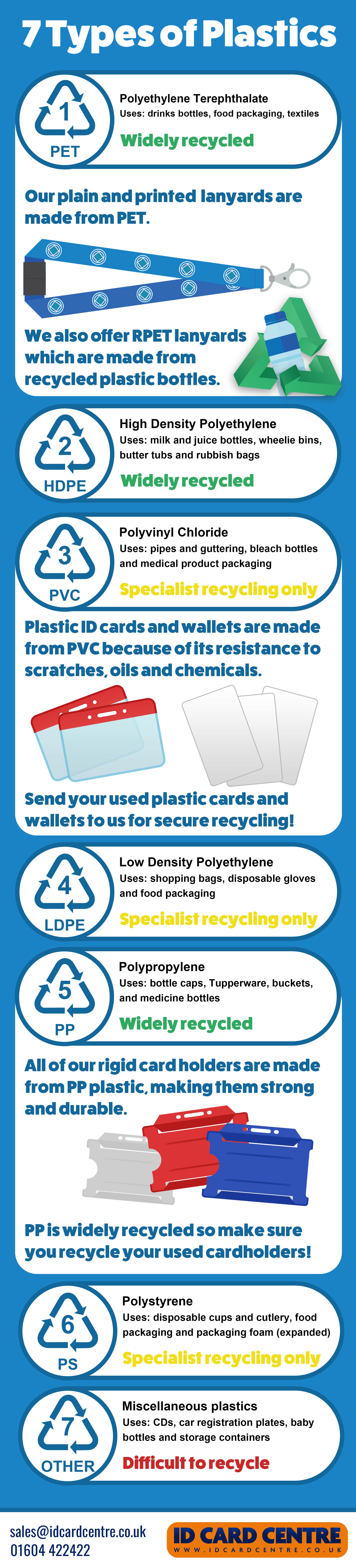
| PET (Polyethylene Terephthalate) | 1 | Drinks bottles, fruit punnets, lanyards | Widely accepted - one of the most recyclable plastics in the UK |
| HDPE (High-Density Polyethylene) | 2 | Milk bottles, shampoo bottles, detergent containers | Widely accepted - straightforward to recycle |
| PVC (Polyvinyl Chloride) | 3 | Window frames, pipes, flooring, ID cards, cable insulation | Rarely accepted - specialist recycling routes only |
| LDPE (Low-Density Polyethylene) | 4 | Plastic bags, cling film, bread bags, plastic film | Inconsistent - not accepted at most kerbsides; use supermarket collection points |
| PP (Polypropylene) | 5 | Yoghurt pots, margarine tubs, bottle caps, takeaway containers | Generally accepted - improving across UK councils |
| PS (Polystyrene) | 6 | Disposable cups, takeaway boxes, foam packaging | Rarely accepted - most facilities reject it, especially foam |
| Other (Polycarbonate, ABS, etc.) | 7 | CD cases, safety visors, reusable bottles, ID cards | Generally not accepted - check locally for specialist routes |
1. PET or PETE (Polyethylene Terephthalate)
PET stands for polyethylene terephthalate. PET is probably the plastic you encounter most often. Fizzy drink bottles, water bottles, fruit punnets, salad dressings bottles and lanyards are all made from it. It's lightweight, transparent, and relatively strong for its weight.
PET is one of the most widely accepted plastics in UK recycling programmes. It can be processed into polyester fibres for clothing, carpet, or even new bottles. According to RECOUP, around 76% of all PET bottles in the UK were collected and recycled in 2022.
2. HDPE (High-Density Polyethylene)
HDPE stands for high-density polyethylene. HDPE is the stiff, slightly waxy plastic used for milk jugs, shampoo bottles, detergent containers, and some plastic pipes. It's denser than it looks and handles impact well without cracking.
This is one of the more straightforward plastics to recycle. HDPE doesn't require especially complex processing, which makes it attractive to recycling facilities. Recycled HDPE becomes plastic lumber, drainage pipes, garden furniture, and new bottles.
High-density polyethylene is also considered one of the safer food-contact plastics, with lower risk of chemical leaching compared to some other types.
3. PVC (Polyvinyl Chloride)
PVC stands for polyvinyl chloride and is one of the most widely used plastics in the world. In its rigid form it's used for window frames, guttering, pipe systems and ID cards. In its flexible state, with the addition of plasticisers, it becomes the vinyl used in flooring, cable insulation, and medical tubing.
The environmental concern with polyvinyl chloride is the additives. PVC on its own is fairly stable, but the plasticisers (particularly phthalates), stabilisers, and other plastic additives used to give it flexibility or durability can be toxic. When PVC burns, it releases hydrogen chloride and, under some conditions, dioxins.
It is rarely accepted by kerbside recycling. Most pieces of plastic made from PVC end up in landfill or incineration. There are specialist recycling routes for some PVC applications, but they're not widely accessible to consumers.
A Note on PVC ID Cards Specifically
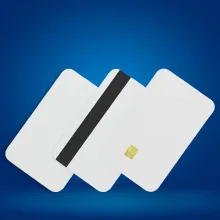
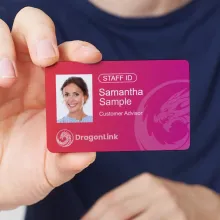
Most plastic ID cards, access cards and membership cards are made from PVC, for the same durability and scratch-resistance reasons that make the material useful elsewhere, which means they carry the same kerbside problem. They shouldn't go in your company’s recycling bin, and if they hold any personal data, they shouldn't go straight in general waste either.
The more responsible route is a specialist take-back scheme such as TerraCycle's zero-waste boxes, which are designed for exactly this kind of hard-to-recycle, data-bearing plastic, or your local recycling centre, where some facilities accept plastic cards (availability varies, so it's worth checking with your local authority first). If the card has been printed with any personal information, that data should be destroyed before disposal regardless of which route you choose.
4. LDPE (Low-Density Polyethylene)
LDPE or Low-density polyethylene is softer and more flexible than its high-density counterpart. It's what plastic bags, squeezable bottles, and the plastic film on your salad all tend to be made from.
The recycling picture here is a little confusing. LDPE is technically recyclable, but most kerbside collections in the UK don't accept it because plastic film jams sorting machinery. Thankfully, supermarkets have in-store collection points for plastic bags and film and because these don't need sorting from each other, these are recycled responsibly. So, the next time you see "film - plastic not currently recycled" on some packaging, now you know why.
5. PP (Polypropylene)
PP is an abbreviation for Polypropylene and is tough, heat-resistant, and has a high melting point, which makes it the default choice for food packaging that goes in the microwave. Yoghurt pots, margarine tubs, bottle caps, straws, and some medical equipment are also typically PP.
Its recycling record has improved. More UK councils now accept polypropylene in kerbside collections than they did a decade ago, though acceptance still varies by area. Recycled PP is used in car parts, garden furniture, storage containers and more.
PP has a really handy property which makes it suitable for a host of applications. It doesn't absorb water, which makes it resistant to mould and bacterial growth, but do always check the label on your microwaveable lasagna just in case.
6. PS (Polystyrene)
Polystyrene, known as PS, exists in two main forms: the rigid type used in disposable cups, plastic cutlery, and some food packaging; and expanded polystyrene (EPS), the lightweight foam used in takeaway boxes, packaging material, and insulation.
Both forms are notoriously difficult to recycle at scale. EPS is around 95% air, which makes it bulky to transport relative to its weight. Most recycling facilities simply don't accept it. A significant proportion of discarded polystyrene ends up as plastic pollution in the environment, where it breaks into small pieces that are difficult to collect and can be ingested by wildlife.
This is why many manufacturers are switching to eco-friendly packaging like cardboard cups and paper bubble wrap which are much more easily recycled.
7. Other (Polycarbonate, ABS, Biodegradable Plastics, and More)
Category 7 is a catch-all for anything that doesn't fit neatly into the first six. It includes polycarbonate, acrylonitrile butadiene styrene (ABS), and a growing range of biodegradable plastics and bio-based polymers. Some multi-layer packaging materials also fall here.
Polycarbonate is the hard, clear plastic used in safety visors, machine guards and reusable water bottles. ABS is used extensively in electronics and LEGO bricks. Neither is widely recyclable through standard kerbside systems.
Biodegradable and compostable plastics are increasingly common but often misunderstood. Many require industrial composting conditions to break down, they don't simply decompose in a back garden, and they can cause contamination problems if mixed with conventional plastic recycling.
Category 7 is essentially the "complicated" drawer of the plastic world.
Why This Actually Matters
The UK generates two million tons of plastic waste a year. A substantial portion of that is technically recyclable. The gap between what could be recycled and what actually is, comes down to infrastructure, consumer knowledge, and the economics of plastics recycling. In some cases, sorting and reprocessing plastic costs more than the recovered material is worth.
Knowing your plastic types won't fix the system. But it does help you make better decisions at the bin and understand why "recyclable" on packaging sometimes means less than it appears to.
Making Eco-Friendly Choices for Your ID Cards
Choosing the right products to use in your business is one of the easiest ways to reduce the environmental footprint of the products your organisation uses every day. We've spent a lot of time working with our suppliers to bring alternatives across our range so that going greener doesn't mean compromising on durability, security or finish. Here's what's available, and why it makes a difference.
Lanyards Made to Be Recycled
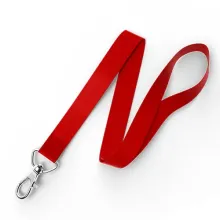
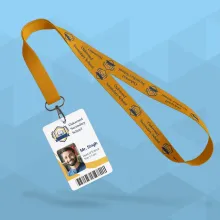
Our standard lanyards are made from PET, one of the most widely recycled plastics in the UK. For organisations who want to go a step further, our RPET lanyards are made from recycled PET rather than virgin plastic. They look and feel identical to our standard polyester lanyards and can be recycled again at the end of their working life. They're available plain or fully branded, so switching to a more sustainable option doesn't mean compromising on how your lanyards look.
Card Holders That Are Easier on the Planet
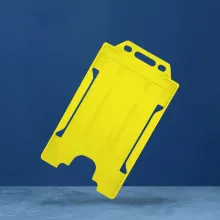
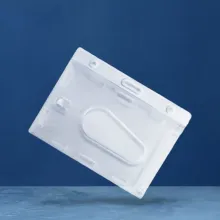
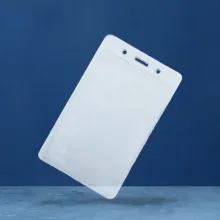
Vinyl card holders are made from PVC, which makes them durable but difficult to recycle responsibly. Our biodegradable ID card holders are made from polypropylene (PP) with biodegradable additives instead, one of the most widely accepted plastics in household recycling collections across the UK and just as durable as PVC. It's a simple swap that makes end-of-life disposal significantly easier, without changing how the holder performs day to day.
Biodegradable and Recycled PVC Cards
Standard ID cards are made from PVC for good reason: it's durable, scratch-resistant and holds print quality well over years of daily use. But we know PVC is one of the harder plastics to recycle, which is why we also offer biodegradable and recycled PVC ID card options for customers who want the same performance with a lighter environmental footprint. These cards are built to the same exacting standards as our standard range, so there's no trade-off between sustainability and quality, just a better choice for organisations who want their ID solutions to reflect their values.
"Sustainability isn't a box we tick and forget about; it's something we've been working at for years, before it was fashionable to talk about. Our building runs carbon negative, we shred and recycle PVC on site rather than just sending it to landfill, and we keep looking for better options for our customers, like recycled PET and biodegradable card materials.
We know plastic ID products aren't going away anytime soon, but we can keep making smarter choices about how they're made and what happens to them afterwards. That's the standard we hold ourselves to, and it's the same one we want to help our customers meet too." Ben O'Brien, Managing Director
Knowing the Difference Is the First Step
The numbers on your packaging will never tell you the full story because that's not what they were designed to do. But knowing which plastics you're working with, and which alternatives exist, puts the decision back in your hands. Whether that means choosing RPET lanyards over standard ones, switching to polypropylene card holders, or asking about our biodegradable PVC range the next time you reorder, every small choice adds up to a big change to your company's carbon footprint.
If you'd like to talk through which of our eco-friendly options would suit your organisation, get in touch with our team, we're always happy to help you find the right balance between performance and sustainability.
FAQs
What do the numbers on plastic mean?
The numbers inside the recycling triangle on plastic packaging are called resin identification codes. Introduced in 1988, they run from 1 to 7 and identify which type of polymer a plastic product is made from. They were designed to help recycling facilities sort materials, not to tell consumers what can or can't go in their bin. A number inside a triangle does not mean a product is recyclable. It simply tells you what the plastic is made of.
Which plastics can be recycled in the UK?
The most widely accepted plastics at kerbside in the UK are PET (code 1), HDPE (code 2) and PP (code 5). These are commonly found in drinks bottles, milk bottles and yoghurt pots. LDPE (code 4) is used in plastic bags and film and is accepted by some councils but not most, so supermarket collection points are often the better option. PVC (code 3) and polystyrene (code 6) are rarely accepted at kerbside. Acceptance varies significantly by area, so it's always worth checking your local council's guidance directly.
Why can't plastic film be recycled at home?
Plastic film is technically recyclable, but most kerbside collections in the UK don't accept it because it jams the mechanical sorting machinery used at recycling facilities. The practical alternative is to collect clean plastic film and drop it off at a supermarket collection point, where it can be processed separately without causing machinery problems.
What is the most environmentally friendly plastic?
No plastic is without environmental impact, but some are significantly easier to recycle than others. PET and HDPE have the most established recycling infrastructure in the UK and the highest collection rates. RPET is recycled PET and goes a step further by using already-processed material rather than virgin plastic, which reduces the demand for new production. Polypropylene is also increasingly well supported by UK recycling collections. At the other end of the scale, PVC and polystyrene have limited recycling routes and are generally considered the most problematic plastic types from an end-of-life perspective.
Are plastic ID cards recyclable?
Plastic ID cards are made from PVC, which is rarely accepted by kerbside recycling collections in the UK. They shouldn't go in your standard recycling bin. The most responsible disposal routes are a specialist take-back scheme such as TerraCycle, or a local recycling centre that accepts PVC. Availability varies, so it's worth checking with your local authority first. If your cards carry any printed personal data, that information should be securely destroyed before disposal regardless of which route you use.
What are RPET lanyards?
RPET stands for recycled polyethylene terephthalate. It is the same plastic used in drinks bottles and standard polyester lanyards but made from material that has already been used and reprocessed rather than produced from virgin plastic. RPET lanyards look and feel identical to standard polyester lanyards, can be printed or plain, and can be recycled again at the end of their working life. For organisations looking to reduce the environmental impact of their ID products without compromising on quality or appearance, they're a straightforward switch.
Are biodegradable PVC cards as durable as standard cards?
Yes. Our biodegradable PVC cards are manufactured to the same specifications as standard PVC cards. They offer the same scratch resistance, print quality and durability you'd expect from a card that needs to withstand daily use. The difference is in what happens at the end of their life. Biodegradable PVC is designed to break down more responsibly than standard PVC rather than persisting in landfill indefinitely. There is no trade-off on performance.
Sources Used
- https://www.recoup.org/wp-content/uploads/2023/11/2022-UK-Household-Plastic-Packaging-Collection-Survey-compressed-compressed.pdf
- https://ismwaste.co.uk/help/seven-different-plastic-types/
- https://shop.terracycle.com/en-GB/
- https://www.statista.com/topics/4918/plastic-waste-in-the-united-kingdom-uk/
About the Author

Ben O'Brien
Managing Director
Ben O’Brien is the Managing Director of ID Card Centre and a recognised authority in complex access control applications and eco-friendly identification solutions. Since entering the ID card printing industry in 1998, Ben has led countless projects across sectors, combining deep technical knowledge with a commitment to sustainability and innovation. Under his leadership, ID Card Centre continues to set standards for secure, efficient, and environmentally conscious ID systems.