

















































Published 05 October 2026
Last Updated 05 October 2026

Martyn's Law in Schools and Universities: A Practical Starting Point
There are 24,499
schools in England educating more than 8.9 million pupils and most of them
reach the same threshold at some point each term. At a parents' evening, a
nativity play, sports day or an open evening, 200 or more people are on site at
once. That number matters because it is the trigger for the Terrorism (Protection of
Premises) Act 2025, now better known as Martyn's Law.
The Act has
been law since receiving
Royal Assent on 3 April 2025, and it is expected
to come into force in Spring 2027. The Home Office published
its statutory guidance in April 2026. Notification guidance followed in
July 2026, and the regulator is now building the systems it will use to
register and inspect premises. For school business managers, trust estates leads,
college principals and university security teams, this academic year is the one
in which preparation needs to happen.
If you want a
general overview of the Act itself, our guide
to the Protect Duty and Martyn's Law covers the background. This guide is
for those in education to understand how to get a handle on Martyn’s Law early.
Where
Martyn's Law stands in September 2026
Key dates
so far
•
3 April 2025: The Act received Royal Assent.
•
September 2025: The Department for Education
published guidance on how the law will affect schools, colleges and nurseries.
•
15 April 2026: The Home Office published its statutory
guidance. That guidance is intended
to let those in scope comply without needing to buy specialist or consultancy
services.
•
15 April to 12 June 2026: The Security Industry
Authority (SIA) consulted
on how it will regulate. It plans to publish
its final guidance and a consultation report in autumn 2026.
•
14 July 2026: The government issued guidance on
the requirement to notify the SIA when someone becomes, or stops being,
responsible for qualifying premises. The SIA summarised
the notification timelines in August 2026.
What's
still to come
The exact
commencement date has not yet been confirmed. The
Home Office will confirm it through Parliament. April 2027 is the earliest
possible date, because the government promised at least 24 months from Royal
Assent. The SIA's online notification portal is still being built, and volunteers
will be invited to test it from early 2027. The practical upshot is that
you can't notify yet, but you can do everything else.
Does
Martyn's Law apply to your school, college or university?
The
200-person test
A setting is in
scope if 200 or more people may reasonably be expected to be present at the
same time. That headcount includes staff, contractors and any other workers on
site, as well as visitors. In a school, that means pupils, teachers, support
staff and parents all count. Assess capacity against your busiest realistic
moment rather than an ordinary Tuesday. If your numbers reach the threshold at
the busiest expected point, that figure decides your position.
Schools
and colleges
This is the
most important point for most readers. Early years, primary, secondary and
further education settings have a special consideration under the Act, which
places them in the standard tier even if they expect 800 or more people. A
1,800-pupil secondary academy therefore has the same core duties as a 250-pupil
primary. It does not take on the heavier enhanced-tier obligations that apply
to arenas and stadiums.
The statutory
guidance defines further education broadly. It covers colleges, sixth-form
colleges and independent training providers that are wholly or partly publicly
funded.
Universities
Higher
education does not get the same easement. Universities fall into either the
standard or the enhanced tier depending on how many people may reasonably be
expected in each set of premises at the same time. Many universities are likely
to have at least some buildings or events in the enhanced tier, particularly
larger venues and occasions such as graduations and conferences. The assessment
is complicated by the mix of lecture theatres, libraries, students' union
venues, sports centres and conference spaces on a typical campus. Estates and
security teams should map buildings and uses individually rather than assume
one answer for the whole campus.
Mixed-use
sites
The statutory
guidance includes a worked example of a secondary school with a gym, a theatre
and a café. In that example, the school and gym are mainly used for education,
but the café and theatre are open to the public throughout their opening hours,
so they are treated as mainly used for food and drink and for entertainment
respectively. If your school lets a sports hall, theatre or café to the
community, check how each building is classified.
Below 200
people
Settings with
fewer than 200 people are out of scope, but they are still encouraged to have
preparedness plans. Many small primaries will fall into this group. It is still
worth reading the steps below, because the same procedures are good
safeguarding practice.
What
the standard tier asks schools and colleges to do
Notify
the SIA
Each setting
needs a responsible person, typically the proprietor, trust board or governing
body. Once the law commences, anyone
responsible at the commencement date will have three months to notify, and
changes must then be reported within 28 days. The responsible person can
ask someone else to complete the notification on their behalf, but the
responsibility stays with them. For a MAT, that is likely to mean the business
or estates team completing notifications for each qualifying school.
Put four
public protection procedures in place
Standard tier
premises must have public protection procedures covering evacuation,
invacuation, lockdown and communication. In a school context, these look
something like this:
•
Evacuation: Getting pupils, staff and visitors
off site safely by a route away from the threat. Your fire evacuation plan may
not be suitable, because assembling everyone at one point could put them in
danger.
•
Invacuation: Bringing people from playgrounds,
fields and outbuildings into the safety of the building.
•
Lockdown: Securing doors and entrances quickly
to delay or prevent an attacker getting in. That includes knowing who locks
what, and how fast.
•
Communication: Alerting staff, pupils and
visitors quickly with a signal everyone recognises, distinct from the fire
alarm, and informing parents afterwards.
Train,
brief and review
The duty is
about people knowing what to do. The
government's own example of a standard tier venue includes a short
awareness briefing for new staff at induction and reviewing procedures annually
or after significant change. For schools, that fits naturally alongside
existing safeguarding and fire safety induction.
A note on
suppliers, including us: the DfE and Home Office do not endorse any third-party
products or providers. Standard tier compliance is designed to be low-cost, and
much of it is about planning, practice and paperwork rather than new equipment.
What
the enhanced tier adds for universities
Measures
to reduce vulnerability
Enhanced tier
premises need everything in the standard tier plus measures to reduce
vulnerability to attack. These cover monitoring, movement of people, physical
safety and information security, proportionate to the venue. The Home Office
gives CCTV,
bag search policies and vehicle checks as examples for larger premises. On
a campus, that could include CCTV coverage, controlled access to buildings, and
procedures for large events such as graduations and freshers' fairs.
A
compliance document and a designated senior individual
Enhanced tier
measures must be documented, provided to the SIA, and owned by a designated
senior individual. For most universities, that will mean a named senior leader,
typically at director or registrar level, holding accountability.
Penalties
The SIA will
have enforcement powers across both tiers. Standard duty premises face a
maximum penalty of £10,000 with daily penalties of up to £500. Enhanced duty
premises face a maximum of £18 million or 5% of qualifying worldwide revenue,
whichever is greater, with daily penalties of up to £50,000. The SIA says it
will assess
compliance through desk-based assessments and on-site inspections, using a
risk-based approach.
A
practical starting point: six steps to take this term
Step 1:
Confirm who the responsible person is
Agree formally,
and minute it at board or governor level, who holds responsibility for each
site. For MATs, decide now whether notifications will be handled centrally by
the trust or delegated to individual schools. If your trust is already standardising
ID and site processes across its schools, this fits naturally into the same
central workstream.
Step 2:
Assess your peak capacity
For each site,
identify the busiest realistic occasion, whether that's a performance, a
parents' evening, an exam season or a community letting. Record the figure and
how you reached it. For universities, repeat this building by building.
Step 3:
Map existing plans against the four procedures
Most schools
already have a fire evacuation plan, and many have a lockdown policy. Compare
them against the four procedures and look for gaps. Common gaps include having
no invacuation plan for the playground, no distinct lockdown signal, and no
plan for how lockdown works when visitors are in the building.
Step 4:
Check you know who is on site
Evacuation and
lockdown both depend on accounting for everyone afterwards. If your visitor
record is a paper book at reception, ask whether you could say within minutes
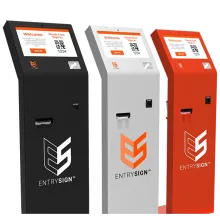
who was in the building and where. A digital
visitor management system that captures sign-in and sign-out in real time
makes that roll call far more reliable. It also supports your existing KCSIE
record-keeping.
Step 5:
Make lockdown fast and strangers easy to spot
Consider how
long it actually takes to secure every external door. Access control can
lock doors centrally in seconds rather than relying on a member of staff
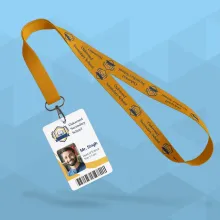
walking the site. Clear, colour-coded ID
cards for staff, visitors and contractors, worn on consistent lanyards, help staff notice
quickly when someone on site isn't accounted for. That is the kind of vigilance
that counter-terrorism awareness training asks for.
Step 6:
Train, drill and record
Brief staff,
practise lockdown and invacuation at least once a year in an age-appropriate way
and keep a record of what you did and what you changed afterwards. When the SIA
asks, evidence of practice will matter as much as the written plan.
Where
ID and access control fit (and where they don't)
To be clear,
Martyn's Law does not require schools to buy ID cards, access control or
visitor management software. The standard tier is about procedures, and a
school can meet it with good planning and practice alone.
What these
tools can do is make the procedures work in practice. Visible ID helps staff
spot unfamiliar faces. Real-time visitor records support accurate accounting
after a lockdown. Access control makes securing a large site realistic in the
time available. For universities in the enhanced tier, controlling the movement
of people is an explicit category of measure, so access control and ID are more
likely to form part of the documented approach.
Starting
now means starting calmly
Martyn's Law is
not designed to turn schools into fortresses. For most schools and colleges, it
formalises what good settings already do: knowing how to get people out, how to
bring them in, how to lock down, and how to tell everyone quickly. Starting this
term gives you time to test plans, fix gaps and brief staff before the SIA's
notification window opens, rather than rushing in spring 2027.
If you'd like
to talk through how visitor management, ID or access control could support your
procedures across one school, a whole trust or a university campus, get in touch. We'll give you
honest advice on what will genuinely help.
About the Author

Ben O'Brien
Managing Director
Ben O’Brien is the Managing Director of ID Card Centre and a recognised authority in complex access control applications and eco-friendly identification solutions. Since entering the ID card printing industry in 1998, Ben has led countless projects across sectors, combining deep technical knowledge with a commitment to sustainability and innovation. Under his leadership, ID Card Centre continues to set standards for secure, efficient, and environmentally conscious ID systems.