



















Published 31 July 2026
Last Updated 04 August 2026
The conversation about AI fake ID usually focuses on nightclubs and age checks. The bigger, quieter problem is what happens when someone uses a convincingly generated employee or contractor badge to walk into your building or as a trust signal to interact with your customers.
Why AI Has Changed the Threat
Getting hold of a company logo, a staff photo, or a job title has never been difficult. Anyone motivated enough could pull that information from a website or LinkedIn long before generative AI existed. The real shift is in what someone can now do with that information: turn it into a finished, convincing ID card in minutes, with no design skill, specialist software, or manual effort required.
Producing a passable fake badge used to mean opening design software, laying out a template by hand, sourcing a matching font and colour palette, and manually compositing a photo so it looked printed rather than pasted. That took time, a working knowledge of design tools, and enough patience to get the details right.
With generative AI, it's a single prompt.
A photo, a company name, and a basic text description are now enough to produce a finished, realistic-looking ID card in seconds, complete with plausible layout, colour, and typography.
That collapse in skill and effort is the real shift behind the current wave of AI fake ID cases. Now nearly 1 in 11 identity verification attempts showed indicators of AI involvement and the use of deepfakes in fraud attempts have increased by 2137% over the last three years.
For businesses, convincing fake documents are becoming more common simply because far more people are now capable of producing them and if your current credential setup doesn't give an opportunist anything meaningful to overcome then your business might be at stake.
What Is Actually at Risk
Physical Access to Your Premises
A convincingly produced fake staff badge may be enough to get someone through a busy reception desk that relies on visual checking alone. Once inside, the risks vary by what your site holds but confidential data, valuable equipment, restricted areas, client records could all be at risk. The badge does not need to be technically sophisticated. It just needs to look right when a busy receptionist takes a flighting glance at it.
Whether your organisation deals with sensitive and confidential material or not, regulating who has access to your premises to keep your assets and employees safe is the reason you have ID cards in the first place.
The Risk to Your Customers and the Public
Engineers, surveyors, delivery drivers, care workers, and anyone else who regularly enters a customer's home or meets the public while representing your company relies on a level of trust that comes simply from wearing the right uniform and carrying the right card. Your own staff see your ID cards every day and would likely spot something off. Your customers see them once, if that, and have far less to compare a fake against.
A convincing fake staff badge in that setting is a route for someone to gain access to a person's home or personal information under false pretences, with all the safety and welfare risks that carries for the customer. A customer harmed or defrauded by someone posing as your employee will, fairly or not, associate the incident with your company, as will the media.
Police and Action Fraud advise householders to check ID and call the company directly to confirm a visit before letting anyone in. A staff ID card that carries a unique ID number or a QR code the customer can scan works with that advice, turning a visual check that relies on memory into a verification step the customer can actually complete on their doorstep.
Your Brand and Reputation
If someone is using a fake ID bearing your company name and logo to commit fraud elsewhere, the reputational consequences land on your business. Clients, partners, and the public do not readily distinguish between a genuine credential and a convincing forgery. A single incident of someone impersonating a member of your staff has the potential to damage trust that took years to build.
This is not a theoretical concern. Over 118,000 cases of identity fraud took place in the first half of 2025 alone. While the reputational damage of these cases is nearly impossible to track, it's felt by every business and customer affected.
Hiring and Onboarding Fraud
AI-generated credentials are not only used to bypass physical access. They are increasingly appearing in employment fraud, where fabricated identity documents are submitted during onboarding to misrepresent a candidate's identity, right-to-work status, or professional background.
As the use of fake IDs becomes more common, so does the risk of regulatory violations, financial losses, and public backlash, and businesses that do not update their verification processes may find themselves exposed to both operational and reputational harm.
Cifas' Insider Threat Database recorded a 32% uplift in cases, with organisations reporting more employees concealing their background information to secure roles or engage in dishonest activity.
Even AI Won't Always Make Fake IDs
Out of curiosity, we tried generating a fake staff ID using a mainstream AI image tool for this article. It refused, flagging the request as a possible violation of its rules around fraudulent or scam content.
That refusal is a positive step in managing this problem. The major AI companies have built guardrails specifically to stop their tools producing convincing fake identity documents, precisely because they know how easy the underlying task has become and the threat they can be. It's an implicit admission of the scale of the problem from the companies best placed to know.
It's also not a reason to relax. Guardrails like this are inconsistent, and workarounds are well documented. Rephrasing a prompt, switching tools, or trying an open-source model with no guardrails at all are all it takes to get past a refusal like the one we hit. Fake Aadhaar ID cards generated this way have already circulated in India, complete with fabricated names and even QR codes.
So, where there's a will there's a way and you cannot rely on someone else's AI safety policy to protect your premises. The block might catch a casual attempt today and fail to catch a slightly more determined one tomorrow. And there will likely always be blackhat AI software to rely on.
What Makes an ID Card Harder to Fake
An AI image generator can produce something that looks right in a photo or on a screen. It cannot reproduce a physical object built with the print technology, materials, and encoding that go into a genuine card. The gap between the two comes down to a small number of features, each one straightforward to add but much more difficult to copy.
Physical Security Elements
Holographic overlays shift colour under different light sources and cannot be replicated with standard inkjet or laser output. UV printing adds a hidden layer, invisible in normal light and only visible under ultraviolet, a feature offered as standard on printers like the IDP Smart 31. Lamination adds a further barrier: laminating ID card printers apply a clear protective film over each card as it prints, guarding against fading and wear while making surface alteration significantly harder if a card is lost or stolen.
Encoding and Access Control Integration
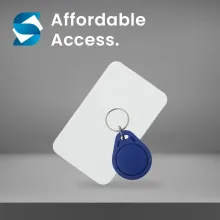
Visual checks have limits, so making the card do something a fake cannot replicate, like communicate with a reader, makes it much harder to reproduce. Access control systems using smart chips and encoding can grant or restrict permission by user.
Placing readers at entry and exit points and issuing encoded cards or key fobs keeps the risk of unauthorised access to a minimum, since an AI-generated card can copy the visual appearance of a genuine credential but not an encoded MIFARE, HID, or Paxton chip. Anyone carrying a visually convincing fake is stopped the moment it fails to open the door.
Professional ID Card Printing
Dye-sublimation and retransfer printers produce CR80-format cards at such a high quality that any other printer cannot approach. The Evolis Primacy 2, for example, supports UV overlays, double overlay lamination, and encoding across a range of smart technologies. This combination creates cards that are nearly impossible to reproduce without a Primacy 2.
Businesses on a tighter budget can still get most of this by using our card printing services. You can choose from mag stripes, holographics, signature panels and more. We use the same print technology that we sell because we believe in the technology, so you can create ID cards with advanced security features without the outlay of an ID card printer with the latest tech.
Reviewing Your Current ID Setup
There is no single measure that eliminates credential fraud entirely, but a layered approach raises the cost of an attempt to a point where most opportunists look elsewhere.
Your ID card security
Start with what your cards currently contain. If they carry a name, photo, and job title with no encoding, no UV feature, and no holographic element, they are relatively easy to replicate from a photograph. Adding even one physical security element changes that calculation. Adding encoded access control changes it further.
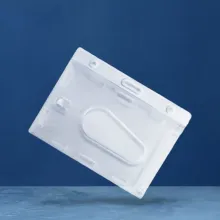
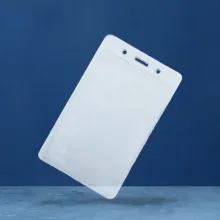
Your lanyard and cardholder setup
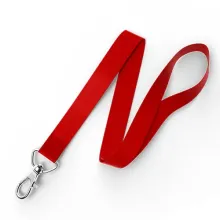
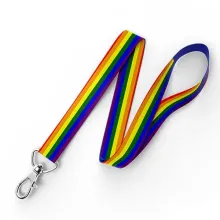
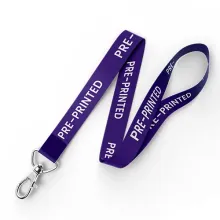
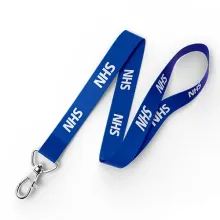
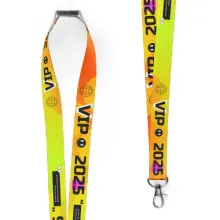
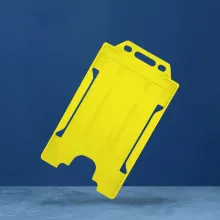
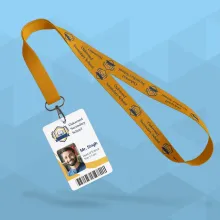
A lanyard gives reception staff and visitors a signal they can read from across the room, long before anyone gets close enough to check the card itself. Colour-coding by role or access level, staff in one colour, visitors in another, contractors in a third, makes an anomaly visible at a distance, without anyone needing to stop and read a name or job title.
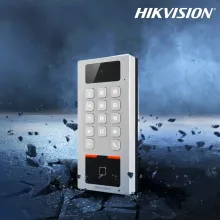
Access Control Systems
Finally, look at your access control. If your current system relies on visual checking at any point in the access chain, encoded credentials with reader verification close that gap in a way that physical deterrents alone cannot.
The Practical Next Step
If you are reviewing your identification setup in light of the current AI threat landscape, the team at ID Card Centre can walk you through the options that fit your organisation's size, budget, and risk profile. Get in touch to discuss ID cards, encoding options and access control credentials that work together as a coherent system. A more secure credential setup does not have to mean starting from scratch, and the right combination of features makes a big difference.
About the Author

Ben O'Brien
Managing Director
Ben O’Brien is the Managing Director of ID Card Centre and a recognised authority in complex access control applications and eco-friendly identification solutions. Since entering the ID card printing industry in 1998, Ben has led countless projects across sectors, combining deep technical knowledge with a commitment to sustainability and innovation. Under his leadership, ID Card Centre continues to set standards for secure, efficient, and environmentally conscious ID systems.