














































Published 25 September 2026
Last Updated 25 September 2026
How to Stop Your ID System Becoming a Liability
Most ID card systems start out as a sensible, proportionate way to control who comes through the door. The problem is that they rarely stay that way on their own. Staff turn over, printers get replaced with whatever was cheapest at the time, visitor sign-in reverts to a paper book because "the app was playing up," and nobody revisits the original decision for five or six years. By the time anyone looks again, the system that was meant to reduce risk has quietly become one of the bigger risks in the building.
This isn't a hypothetical. Physical security failures already show up directly in breach costs, insider fraud figures, and access control incident data, and none of that trend is moving in the more forgiving direction.
Why this is a real issue
Three current figures set the scene for why this matters more now than it did even two or three years ago.
Physical security compromise is a real, measurable contributor to data breaches. IBM's 2025 Cost of a Data Breach Report put the UK average cost of a breach at £3.29 million, with the average time to identify and contain an incident sitting at 241 days. That's a long window for an unaccounted-for entry, a cloned card, or a badge that was never deactivated to do damage before anyone notices.
Insider risk is rising in the UK specifically. Cifas' Insider Threat Database recorded 288 cases in 2025, a 21% increase on the year before, with "dishonest action by staff to obtain a benefit by theft or deception" as the single largest category. Separately, Cifas found that 13% of employees admitted to either selling their company login details to a former colleague or knowing someone who has done so in the past year. An ID system that can't tell you who currently holds a valid credential, or that never revokes access when someone leaves, is a direct cause of exactly this kind of case.
Finally, the access control layer itself is a known, persistent weak point. A widely cited ASIS International survey found that 61% of organisations identified tailgating or piggybacking as their most common access control issue, while a separate industry survey found 71% of security professionals rated a tailgating breach at their own facility as likely to very likely. Card readers and visible ID badges only work as a control if the behaviour around them is enforced. Most organisations know this and address it rarely.
None of these figures showcase wild threats. Instead, they're about ordinary, everyday gaps: a card that still works after someone leaves, a visitor nobody challenged, a badge nobody checked closely enough. That's what turns an ID system from an asset into a liability, quietly, one small oversight at a time.
The Warning Signs Your ID System Is Failing
A liability doesn't usually announce itself. It shows up as a handful of small, familiar compromises that everyone has got used to. If more than a couple of these sound like your organisation, it's worth treating this as a live risk rather than a future project.
Nobody knows how many active cards are in circulation
If leavers' cards aren't reliably collected or deactivated, your access control system is granting entry based on a list that's already out of date.
Visitor sign-in is inconsistent
A paper book, a verbal "yes go on through," or a badge handed out without checking ID against a booking all leave you with no real record of who was on site if something goes wrong.
Cards look identical regardless of role
Staff, contractors, and visitors carrying the same style of badge removes the at-a-glance check that lets reception, security, or even other employees spot someone who shouldn't be there.
There's no physical security feature on the card itself
A name, a photo, and a logo with no holographic element, no UV layer, and no encoding is straightforward to replicate from a good photograph, and increasingly straightforward to generate from scratch.
Access control relies on a human glancing at a badge
If a card doesn't have to talk to a reader to open a door, the system depends entirely on someone paying close attention every single time. Busy receptions and distracted staff make that an unreliable line of defence.
Nobody owns the system
If ID cards, visitor management, and access control sit across two or three different people or departments with no clear accountability, gaps between those areas are where liability accumulates.
What Is Actually at Risk
Physical Access and Asset Security
Unauthorised entry rarely looks dramatic. It looks like someone walking in a few paces behind an employee holding a door, or a visitor badge issued without a proper check. Once inside, the exposure depends on what your building holds, but equipment, stock, confidential records, and the safety of staff and other visitors are all realistically in scope.
Data and Regulatory Exposure
Physical access failures don't stay physical. A device, a filing cabinet, or a workstation reached because someone got past reception becomes a data incident, and data incidents are expensive. Beyond the direct £3.29 million UK average cost cited above, IBM also found that malicious insider breaches averaged $4.92 million globally, among the costliest categories in the report. An ID and access control failure is frequently the first domino, not the whole incident.
Insider Threat
An ID system's job isn't only to keep outsiders out. It's also the record of who was authorised, where, and when, which is exactly what an insider investigation depends on. With insider threat filings up across the UK and a meaningful share of employees openly admitting to sharing or selling credentials, an access control setup that can't produce a reliable audit trail leaves an organisation unable to properly investigate, or defend itself, when something goes wrong internally.
Reputation and Public Trust
Engineers, delivery drivers, care workers, and anyone who represents your company in a customer's home or in public relies on a uniform and a card to establish trust almost instantly. Your own staff see your ID cards daily and would likely notice something wrong. A customer sees the card once, if at all, and has far less to judge it against. Police and Action Fraud advise the public to check ID and call the company directly before letting anyone in. A card that carries a unique reference number or a scannable code the customer can verify turns that advice into something they can actually act on, rather than a check that relies on memory and a fleeting glance.
What a Strong ID System Looks Like
There's no single fix that removes liability entirely, but a handful of features, applied together, raise the effort required to exploit the system to a point where most attempts fail or move elsewhere.
Role-Based Visual Design
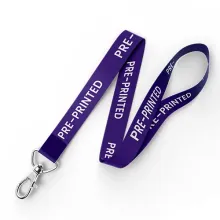
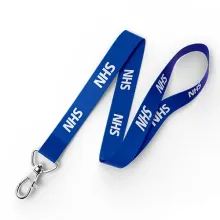
Colour-coding cards and lanyards by role, staff, contractor, visitor, gives reception and colleagues an at-a-glance signal long before anyone needs to read a name or a job title. An anomaly becomes visible from across the room instead of requiring a close inspection nobody has time for.
Physical Security Features
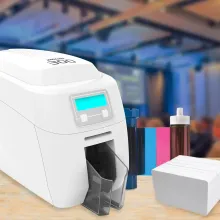
Holographic overlays, UV printing, and lamination each add a layer that's straightforward to build into a card at the point of production but genuinely difficult to replicate without the right equipment. Printers such as the IDP Smart 31 include UV printing (with the security bundle), and laminating printers add a further protective layer that also makes tampering with an existing card far harder.
Encoded Access Control
A card that has to communicate with a reader closes the gap that a purely visual check leaves open. MIFARE, HID, and Paxton technologies let a system grant or revoke access per card, per door, and the moment a card is deactivated it stops working, regardless of how convincing it looks. This is the single most effective control against both cloned credentials and cards that should have been switched off when someone left.
A Proper Visitor Management Process
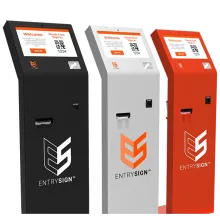
A signed paper book is not a record anyone can rely on later. Cloud-based systems such as EntrySign log who is on site in real time, print a visitor badge that visually matches your staff cards, and give you an accurate answer if you ever need to know exactly who was in the building and when.
A Clear Leaver and Loss Process
The best hardware in the world doesn't help if a card keeps working after someone hands in their notice. A short, enforced process, card deactivated on the employee's last working day, lost or stolen cards reported and switched off immediately, closes one of the most common and most preventable gaps in any system.
Reviewing Your Current ID Card System Setup
Is your card easy to replicate?
If it's a name, a photo, and a logo with no encoding and no physical security feature, it can be replicated from a decent photograph with very little effort. Adding even one physical feature changes that calculation considerably.
Can you tell staff, contractors, and visitors apart at a distance?
If every badge looks the same, colour-coded lanyards and cardholders are a low-cost, high-visibility fix.
What is your access control system?
If access still depends on someone glancing at a badge, an encoded card and reader system removes that dependency entirely, an unauthorised card simply doesn't open the door, however convincing it looks.
How do you track visitors?
If it isn't logged, timestamped, and tied to an actual identity check, it isn't really a control.
Do you have enforced security policies?
Ask when the policy was last tested, and whether anyone has actually checked that a leaver's card stops working on their last day.
The Next Step
Most organisations don't need to replace their entire ID system to stop it being a liability. They need to close two or three specific gaps, usually the ones that have been quietly building for years without anyone deciding to accept that risk. The team at ID Card Centre can review your current cards, printers, and access control setup and recommend the combination of encoding, physical security features, and visitor management that fits your organisation's size, sector, and budget.
Get in touch to talk through where your system stands today and what would close the gap.
About the Author

Ben O'Brien
Managing Director
Ben O’Brien is the Managing Director of ID Card Centre and a recognised authority in complex access control applications and eco-friendly identification solutions. Since entering the ID card printing industry in 1998, Ben has led countless projects across sectors, combining deep technical knowledge with a commitment to sustainability and innovation. Under his leadership, ID Card Centre continues to set standards for secure, efficient, and environmentally conscious ID systems.